Entrances & Access Points
Plan visibility around public doors, staff entrances, reception areas, gates and other important access locations.

Commercial CCTV Across Toronto & the GTA
Professional CCTV, IP camera and video surveillance planning for offices, retail stores, warehouses, industrial properties and multi-site businesses.
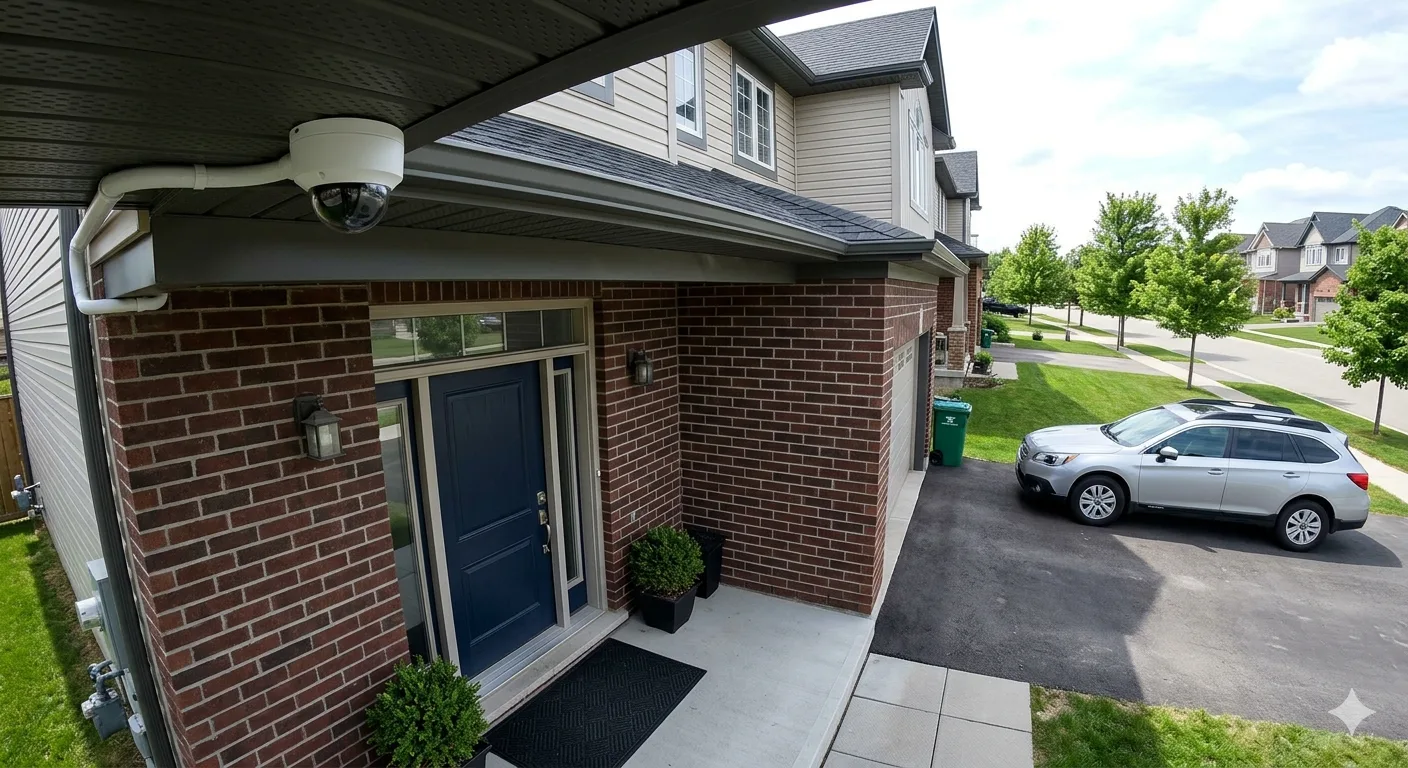
Business Coverage Planning
Commercial surveillance must account for how people, inventory and vehicles move through the site—not simply how many cameras can be installed.
Plan visibility around public doors, staff entrances, reception areas, gates and other important access locations.
Consider appropriate views across retail floors, counters, corridors, shared spaces and selected operational zones.
Support oversight of stockrooms, warehouse aisles, equipment areas and other property-specific assets.
Review loading docks, receiving points, service doors and vehicle activity around logistics areas.
Plan exterior views around parking areas, yards, building approaches and other boundary priorities.
Match storage, playback and supported remote access to camera quantity, resolution and authorized users.
Planning more than one business location? Share the number of properties, priority zones and current equipment so system requirements can be reviewed together.
Discuss Your Commercial Sites →Commercial System Design
Commercial security camera installation involves more than selecting cameras. Coverage goals, building access, lighting, cable routes, network capacity, recording requirements and user permissions must work together.
Kancam reviews these practical requirements before the system scope is finalized, helping businesses avoid disconnected equipment choices and unnecessary blind spots.
Entrances, interiors, inventory, loading and exterior zones
Compatible cameras, cabling, recorder and storage planning
Supported live view, playback and controlled user access
Complete Commercial Scope
The final scope is built around your property, existing infrastructure, coverage priorities and required viewing or recording functions.
Network-camera selection based on image detail, connection, recording and future expansion requirements.
Explore IP camera installation →Planned cable paths and stable connections for supported cameras, recorders and network components.
Explore wired CCTV installation →DVR or NVR planning around camera quantity, resolution, storage capacity and desired footage retention.
Explore video surveillance →Suitable camera placement for parking, yards, gates, loading areas, approaches and exposed locations.
Explore outdoor camera installation →Supported mobile or computer access, playback and appropriate user permissions for authorized personnel.
Explore monitoring services →Assessment of existing cameras, recorders, cabling, resolution support and available system capacity.
Explore upgrades and troubleshooting →Not every commercial site requires the same equipment. A project review helps determine which components and services belong in your installation scope.
Request a Site Review →Commercial Property Types
Each business has different movement patterns, access points, lighting conditions and operational priorities. The camera layout should reflect the way the property is actually used.
Coverage planning for entrances, sales floors, service counters, dining areas, stockrooms and exterior approaches.
Appropriate views for reception, shared access, corridors, parking and selected business-critical areas.
Camera planning around inventory aisles, loading docks, receiving areas, vehicle movement and yard access.
Scalable surveillance considerations for wide perimeters, equipment zones, gates and changing site conditions.
System planning for common entrances, parking areas, service corridors and other shared-property locations.
Coverage options for evolving properties where access, power, connectivity and future changes require planning.
Have a specialized commercial property? Share the site type, operating schedule and priority areas so the installation scope can be planned around the real environment.
Discuss Your Property →Camera Technologies & Options
Camera type, recording method, connection, storage and access features should be matched to the site—not selected from a generic package.
Network-based cameras for scalable resolution, recording and supported remote access.
Explore IP camera installation →Stable camera connections with planned cabling, power and recorder integration.
Explore wired CCTV installation →Weather-aware options for parking, loading areas, yards, gates and building perimeters.
Explore outdoor camera installation →Recording equipment and storage capacity planned around camera count, resolution and retention.
Explore video surveillance →Business Security Benefits
The right surveillance plan supports day-to-day awareness while giving your business a clearer way to review important areas and events.
Review entrances, staff or customer areas, inventory, loading points and other selected zones from an organized camera layout.
Recording and playback can help authorized users review events, timing and activity when the selected system supports those functions.
Use suitable views to understand activity around receiving, service areas, access points, parking and other operational locations.
DVR or NVR planning can organize multiple camera feeds, playback and storage around the system’s requirements.
Recorder channels, network capacity and cabling can be considered so future camera additions are easier to evaluate.
Authorized users may be able to view live video or playback remotely when the chosen equipment and network support it.
Security needs change as a business changes. A scalable camera plan can be reviewed again when your property, operations or coverage priorities grow.
Plan Your Business System →From Site Review to Handover
A structured process helps keep coverage, equipment, cabling, recording and user access aligned before the system is handed over.
Discuss property type, operating priorities, existing equipment, access points and areas that need visibility.
Map camera positions, viewing goals, lighting conditions, cable routes and any important blind spots.
Confirm camera types, recorder, storage, network needs and project requirements before installation begins.
Install supported cameras, cabling, recording equipment and related components according to the approved scope.
Check views, recording, playback and supported access features, then explain everyday system controls.
Need installation around business operations? Scheduling, access requirements and site conditions can be discussed while the commercial project is being scoped.
Start a Commercial Plan →Commercial Installation Coverage
Kancam plans and installs commercial camera systems across Toronto, surrounding GTA communities and selected nearby Southern Ontario locations.
Business camera planning for offices, retail, hospitality and commercial buildings across Toronto and York communities.
Commercial CCTV coverage for stores, warehouses, offices, loading areas and business properties in Peel.
Video surveillance planning for commercial entrances, parking, perimeters and operational spaces across Halton.
Commercial camera systems for industrial properties, warehouses, offices and business sites across the west.
Business surveillance planning for growing operations, industrial locations and multi-use commercial properties.
Project-specific commercial installation availability for business properties in Niagara and selected nearby areas.
Do not see your business location? Send the city, property type and project requirements so installation availability can be reviewed.
View All Service Areas →Commercial CCTV FAQs
Clear answers about business camera quantity, pricing factors, recording, remote viewing, upgrades and installation scheduling.
The number depends on entrances, interior zones, parking, loading areas, desired image detail, property size and blind spots. A coverage plan should be created before the final quantity is selected.
Pricing depends on camera type and quantity, building layout, mounting height, cable routes, recorder and storage requirements, network work and remote-access needs. A site-specific scope is more accurate than a generic package price.
Compatible network-camera systems may support authorized access to more than one location. Internet connections, recorder compatibility, software and user permissions must be reviewed first.
Expansion may be possible when recorder channels, resolution support, cabling, power and software are compatible. An assessment identifies what can be retained and what may need upgrading.
Depending on the selected system, footage may be recorded to a DVR, NVR or another supported storage arrangement. Capacity is planned around camera count, resolution and desired retention.
Scheduling depends on project scope, site access and installer availability. Operational timing requirements should be discussed during quoting and planning.
When supported by the selected camera and recorder, network configuration can include authorized mobile or computer viewing, playback and appropriate user access settings.
Some existing equipment may be reusable after compatibility is reviewed. Resolution support, power, cabling condition, recorder capacity, network standards and software limitations all need to be checked.
Why Choose Kancam
Business surveillance works best when the system is planned around the property, installed carefully and explained clearly to the people who will use it.
Camera positions, viewing angles, lighting, access points and cable routes are considered for the actual commercial site.
Mounting, cabling and equipment placement are considered for a reliable system and a neat finished appearance.
Camera type, resolution, recording capacity, storage and remote-access requirements are reviewed before the system is finalized.
Site access, operating hours and areas that must remain active can be discussed while the project is scoped.
Views, recording, playback and supported user-access features are checked before the system is explained to designated users.
Existing systems, upgrades, additional cameras and changing business requirements can be reviewed as needs develop.
Clear communication is part of a commercial installation. Share your site priorities, current system and operating requirements so the project scope can be discussed accurately.
Discuss Your Commercial Project →Plan Your Business Surveillance
Tell Kancam what type of business you operate, where the property is located, which areas need coverage and whether you need a new system or an upgrade.
